Best Season for Northern European Lighthouse Trips: Spring, Summer, or Autumn?
A lighthouse trip is decided by small things you cannot book: whether the fog lifts by noon, whether the ferry runs on a Tuesday in October, whether the sun is still above the horizon when you finally reach the point after a forty-minute walk across wet grass. Northern Europe gives you a workable window from roughly April to October, but those months are not interchangeable. A week in Denmark in May and the same week in September are two entirely different journeys, and the one you choose should depend on what you actually want from the coast.
Spring: long light, empty roads, a few closed gates
From late March the light comes back fast. By mid-May you can be standing under Kullens fyr in southern Sweden at nine in the evening with a warm sky and no one else on the path. Further north the change is dramatic: in early April the Norwegian coast still has snow on the headlands, and by the end of May the sun barely bothers to set.
Spring is the season for people who want solitude and are willing to accept a few practical limits. Many small lighthouses run by volunteer trusts and local associations open at Whitsun or in early June, not before. Mountain roads in Norway may still be closed by snow well into May. Island ferries are often on a reduced shoulder timetable, with two or three crossings a day instead of six.
The compensation is real. The air is at its clearest before the summer haze builds, seabirds are returning to the cliffs, and accommodation on the coast is cheap and available. On Scotland's west coast the midges are largely absent in early May and unbearable by mid-July, which alone makes spring worth considering. Pack layers, a windproof shell and gloves; a May morning at Fanad Head in Ireland can feel closer to February than to summer.
Summer: everything open, everything booked
Summer solves the logistics. Ferries run full schedules, lighthouse cafés and visitor centres are open, museums attached to the towers keep normal hours, and above the Arctic Circle the sun simply stays up. In Shetland the midsummer day gives you more than eighteen hours of usable light; in Lofoten you can photograph at midnight without a tripod compromise.
It also brings the crowds. July and August are domestic holiday season across Scandinavia, Germany and the Netherlands, and the North Sea coast fills with cars and campervans. Parking at Westerhever or the Terschelling ferry terminal on a sunny August weekend is a test of patience. Book vehicle spaces on island ferries weeks ahead, and expect the popular lighthouse cottages to be gone by February.
The light is a trade-off too. A sun that never fully sets produces long, soft, blue nights rather than the fiery sunsets photographers chase. Add the sea fog that drifts over the North Sea in July and you can lose a whole afternoon of views. Summer is the easiest season to travel in and the hardest to photograph in.
Autumn: the connoisseur's choice
September is arguably the best single month for a lighthouse trip in this part of the world. The crowds have gone, the sea is still relatively warm, the light softens into gold, and most ferry timetables have not yet been cut back. Prices drop, and the people running small coastal museums finally have time to talk to you.
October is more of a gamble, and a thrilling one. Atlantic depressions roll in every few days, and standing on a headland at Rubjerg Knude while a front comes through is worth more than a dozen flat summer afternoons. But daylight shrinks quickly — around ten or eleven hours by mid-October in Denmark and western Norway — and some island services drop to a few crossings a week. Several lighthouses close entirely after the first week of September.
If you go late, build in a spare day for each ferry crossing and treat the weather as the itinerary rather than an obstacle to it.
What the timetables actually do
Ferry schedules drive lighthouse travel more than weather does. Before you commit to a date, check these:
- Timetable change dates. Many North Atlantic and Baltic operators switch to summer timetables in late March or April and back in late September or October. A route that runs four times a day in July may run twice a week in November.
- Vehicle bookings. On popular Scottish, Norwegian and Frisian island routes, car spaces sell out in high summer. Foot passengers rarely have a problem.
- Weather cancellations. Exposed crossings in the Faroes, Shetland and along the Norwegian coast get cancelled with little notice. Always have a Plan B lighthouse on the mainland.
- The last crossing. A late-afternoon return is often the one that gets trimmed first in shoulder season, leaving you stranded on an island in the best possible way.
- Sunday and Monday gaps. Small inter-island services sometimes skip the quietest day of the week entirely.
Photography, season by season
Spring
Clear air and low sun angles mean crisp long-distance shots. Snow on northern headlands gives contrast that summer cannot. Bring a polarising filter for the hard midday light and expect cold hands.
Summer
Embrace the blue hour, which lasts for hours at high latitudes. Forget the classic sunset-and-silhouette shot and work with mist, backlight and silhouettes instead. Sea fog can be an asset if you get above it — climb the tower when the coast is buried.
Autumn
This is when the big seas arrive. A long lens from a safe, high viewpoint beats standing on wet rocks. Take more lens cloths than you think you need, and remember that salt spray and tripods do not mix well. A storm-proof bag and a strap around your wrist are not optional.
Matching the season to the lighthouse
Exposed Atlantic sites — Ardnamurchan, Kalsoy's Kallur, the outer Lofoten towers — reward patience and punish a tight itinerary, so give them a shoulder-season week with room to move. Sheltered Baltic and Danish towers such as Kullen or the white chalk-coast lights are forgiving in any month and make good early-season targets. Bird cliffs, including the areas around Dyrhólaey in Iceland, close for nesting, so check dates before you build a plan around them. And if a lighthouse is on your list because of a photograph you saw, find out which month that photograph was made in: the answer is often September.
Before you book
Pick the season by what you can tolerate, not by what sounds most romantic. If you need open attractions and full ferry service, go between mid-June and late August and book early. If you want the coast to yourself and the best light, aim for the second half of May or the whole of September. If you chase storms, take October with a flexible ticket and two spare days.
Then check three things before paying a deposit: the lighthouse's opening dates, the ferry timetable valid on your exact travel dates, and the average daylight at your latitude. Everything else — the weather, the fog, the wind — you can work around once you are there. Carry a waterproof jacket whatever the month, keep a paper note of the ferry phone number, and leave one afternoon unplanned. The best moments on a lighthouse trip are usually the ones you did not schedule.
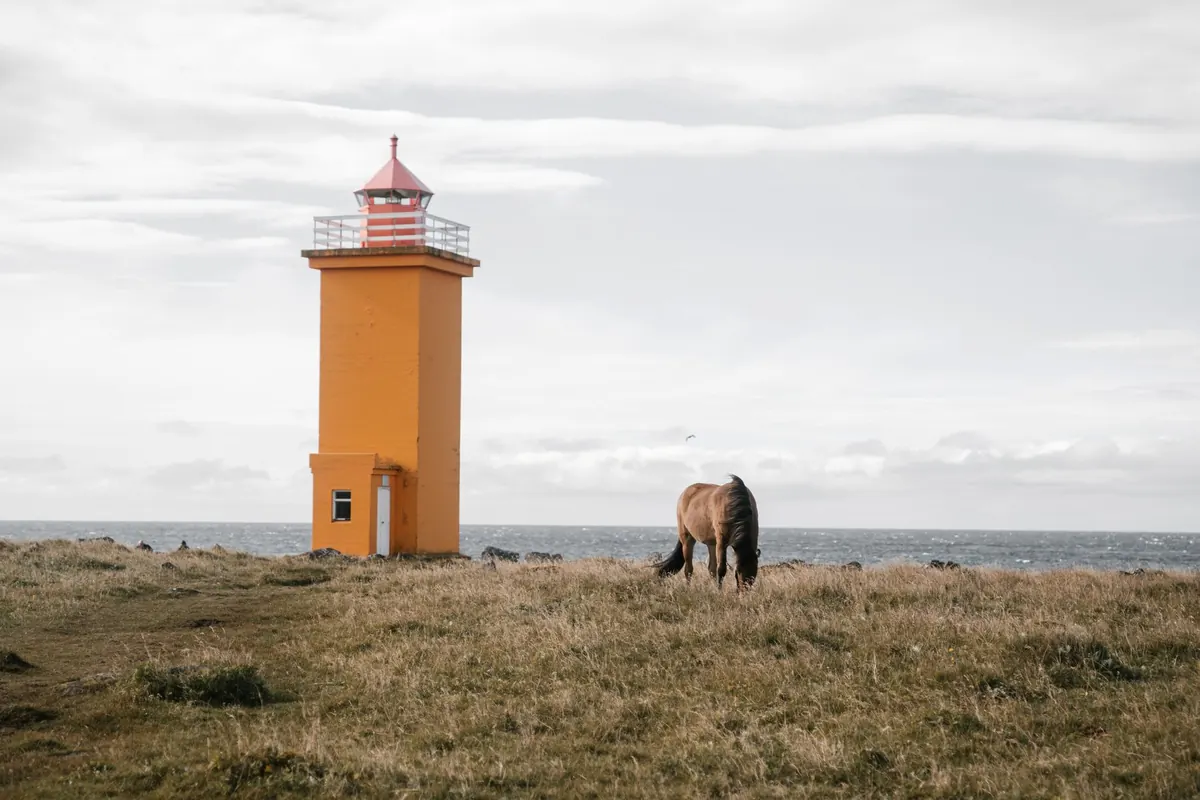
Photo: ArtHouse Studio / Pexels
Lighthouse Stays vs. Nearby Hotels: How to Choose Overnight Accommodation
A practical comparison of lighthouse keeper cottages and nearby hotels on access, amenities, noise,...
Seven Curious Lighthouse Superstitions and Coastal Legends
A tour through lighthouse ghosts, sailor taboos and wreckers' tales — and a practical guide to telling a...
About Us